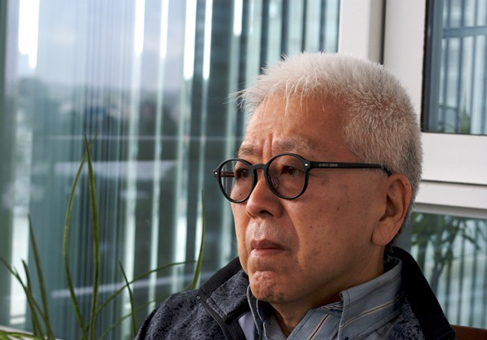
150+ Canadians Day 118: James Orbinski

Image: The Silent Photographer on Wikimedia

Dr. James Orbinski, physician, writer, and humanitarian, contributes to peace with his on-going commitment to medical humanitarianism.

Dr. James Orbinski co-founded the Canadian chapter of Médecins Sans Frontières / Doctors Without Borders (MSF) in 1991. He was international president of MSF for three years and accepted the Nobel Peace Prize on behalf of the organization in 1999.

He led medical missions in several war-torn countries including Rwanda, Zaire, Afghanistan, and Somalia.

He has founded and supported organizations addressing barriers to health in resource-limited communities, providing services to people with HIV/AIDS, promoting research into neglected diseases, and working on global health projects.

Dr. Orbinski published a book and was the focus of a film on the genocide in Rwanda; he said that the experience of being in the country during the genocide changed him from a researcher and scientist to a doctor focusing on humanitarian medicine.

Dr. Orbinski has been recognized for his humanitarian work in Canada and internationally.


Got a name in mind? Contribute to the list! Send us your suggested names on the Contact Us page.

Want to get 150+ Canadians straight to your inbox? Subscribe here.

Continue Reading

150+ Canadians Day 117: Human Rights Commissions

Image: Canadian Human Rights Commission Logo

HUMAN RIGHTS COMMISSIONS in Canada protect the basic right of Canadians to be free from discrimination and harassment.

Federal and provincial Human Rights Commissions follow the principle that “all individuals should have an opportunity equal with other individuals to make for themselves the lives that they are able and wish to have and to have their needs accommodated consistent with their duties and obligations as members of society, without being hindered in or prevented from doing so by discriminatory practices based on race, national or ethnic origin, colour, religion, age, sex, sexual orientation, marital status, family status, disability or conviction of an offence for which a person has been granted or in respect of which a record suspension has been ordered.”

Following are some examples of statements issued by Human Rights Commissions in Canada: 

  • “[E]veryone in Canada [should] speak out against hateful acts that threaten our families, our friends, our neighbours and our way of life.  Speak loudly so that both the victims and the perpetrators hear you when you say: My Canada includes everyone.”
  • The Genetic Non-Discrimination Act, [is] an important step for privacy and human rights in Canada. [It] prohibits genetic discrimination across Canada. It bars any person from requiring individuals to undergo a genetic test or disclose the results of a genetic test as a condition of providing goods or services, or entering into a contract.
  • The rights of transgender and gender-diverse people in Canada [must be made] clear and explicit in federal human rights law.
  • The Canadian Human Rights Commission is adding its voice to those of Indigenous women across the country who are urgently calling for greater equality, increased access to justice, and improved safety for Indigenous women and girls in Canada.
  • The Canadian Human Rights Commission released “Impaired at work: a guide to accommodating substance dependence.” …[W]hen an employee is dependent on drugs or alcohol, an employer has an obligation to accommodate and support their recovery.

Got a name in mind? Contribute to the list! Send us your suggested names on the Contact Us page.

Want to get 150+ Canadians straight to your inbox? Subscribe here.

Continue Reading

150+ Canadians Day 116: Roy Bonisteel

Image: Toronto Star Archives

Roy Bonisteel contributed to peace by reporting on religion on CBC TV’s Man Alive as “Canada’s Humanities Teacher.”

Roy Bonisteel, radio broadcaster, journalist, television host, university instructor and citizenship judge was born in 1930. From 1967 to 1989 he was host of the CBC Television program Man Alive, which explored man’s relation to spirit, spirituality and religion.

Called, “Canada’s Humanities Teacher” by the Globe and Mail, Roy Bonisteel interviewed thought leaders of his time: Malcolm Muggeridge, Eli Wiesel, Mother Teresa, the 14th Dalai Lama, Hans Kung and many others.

In 1964, at a time when Canadian broadcasting regulation required radio stations to broadcast religious shows, Bonisteel entered into an agreement with the United Church of Canada to produce a 15-minute program titled Checkpoint. The show was syndicated across Canada. This then led to a position as director of broadcast for the United Church in Vancouver in 1965. He received an appointment as head of ecumenical radio operations for the Anglican, Roman Catholic and United churches, in Vancouver, the first person to have such an assignment. Bonisteel started a religious open-line radio program titled God Talk, with a panel consisting of Rev. Walter Donald, Rev. Jack Shaver and Fr. John Shields.

“We are moulded into a materialistic world where we do a lot eating, drinking and making merry until we ask the basic questions, ‘Who am I? Where am I going? What is our purpose in life?'”

A bronze memorial statue of Bonisteel, seated and holding a book, overlooks the Bay of Quinte in a Belleville garden.


Got a name in mind? Contribute to the list! Send us your suggested names on the Contact Us page.

Want to get 150+ Canadians straight to your inbox? Subscribe here.

Continue Reading

150+ Canadians Day 115: Bruce Cockburn

Image: Janet Spinas Dancer on Flickr

Bruce Cockburn contributes to peace by writing and performing powerful songs advocating for a more peaceful and just world.

“Part of the job of being human is just to try to spread light, at whatever level you can do it.”

Canadian activist, musician, songwriter, singer and spiritual seeker,  Bruce Cockburn is deeply respected for his activism on issues from native rights and land mines to the environment and Third World debt, working for organizations such as Oxfam, Amnesty International, Doctors Without Borders, and Friends of the Earth.

A global citizen, his remarkable journey has seen him embrace folk, jazz, rock, and world beat styles while travelling to places as Guatemala, Mali, Mozambique, and Nepal, and writing memorable songs about his ever-expanding understanding and experience of the world. His songs of protest have supported the work of activists worldwide. His song, “If I Had a Rocket Launcher”, is an angry response to the plight of refugees in Central America. “Stolen Land”, refers to the land claims of British Columbia’s Haida people, and, “If a Tree Falls”, condemns the deforestation of the Amazon.

Bruce Cockburn has an induction into the Canadian Music Hall of Fame, Governor General’s Performing Arts Award, 20 gold records, 13 Junos, 6 Honourary degrees, and an Order of Canada.

“A sane person doesn’t think war is a good idea. I’m not a pacifist. I feel that there are situations where fighting is inescapable, but we don’t go looking for those things.”


Got a name in mind? Contribute to the list! Send us your suggested names on the Contact Us page.

Want to get 150+ Canadians straight to your inbox? Subscribe here.

Continue Reading

150+ Canadians Day 114: Tomb of the Unknown Soldier

Image: Canadian Stamp News

Tomb of the Unknown Soldier contributes to peace by serving as a reminder to the tragedy of war and how necessary it is to maintain peace so that others don’t die in war.

The Canadian Tomb of the Unknown Soldier is located before the National War Memorial in Confederation Square across from the Parliament Buildings in Ottawa.

The culmination of a project begun by the Royal Canadian Legion, the tomb was added to the war memorial in 2000 as part of the Canada Millennium Partnership Programme and holds the remains of an unidentified Canadian soldier who died in France during World War I. The soldier was selected from a cemetery in the vicinity of Vimy, the site of a famous Canadian battle where Canadian troops fought as a combined force.

The remains of the soldier buried there were exhumed on the morning of May 16, 2000, and the coffin was flown in a Canadian Forces aircraft to Ottawa on May 25, accompanied by a 45-person guard of honour, a chaplain, Royal Canadian Legion veterans, and two representatives of Canadian youth. In Ottawa, the Unknown Soldier lay in state for three days in the Hall of Honour in the Centre Block of Parliament Hill.

On the afternoon of May 28, the body of the Unknown Soldier was transported to the National War Memorial on a horse-drawn Royal Canadian Mounted Police (RCMP) gun carriage. The Governor General, and the Prime Minister, as well as veterans, Canadian Forces personnel, and members of the RCMP were in the funeral cortege. Then, with full military honours before a crowd of 20,000, the body, in a silver maple casket, was re-interred in a sarcophagus in front of the war memorial. Legionnaires placed a handful of soil from each of Canada’s provinces and territories, as well as from the soldier’s former grave site, on the casket before the tomb was sealed.

The tomb is intended to honour the approximately 116,000 Canadians who died in combat, as well as all members of the Canadian Armed Forces—in all branches—who died or may die in all conflicts, past, present, and future.

The tomb has become a focal point at all commemorative events at the National War Memorial.

The original headstone of the Unknown Soldier is the sole artifact and the focal point of Memorial Hall in the Canadian War Museum. The hall was designed in such a way that sunlight will only frame the headstone once each year on the 11th of November at 11:00 am.

At the former burial site of the Unknown Soldier, a grave marker similar to the other headstones in the Cabaret-Rouge Cemetery was placed at the now-empty grave. It is inscribed with these words in both French and English:

THE FORMER GRAVE OF AN
UNKNOWN CANADIAN SOLDIER
OF THE FIRST WORLD WAR.
HIS REMAINS WERE REMOVED
ON 25 MAY 2000 AND NOW
LIE INTERRED AT THE
NATIONAL WAR MEMORIAL
IN OTTAWA CANADA.

The Royal Canadian Legion leadership pronounced that the tomb deserved a military or police guard as a symbol of respect and to protect it from vandalism and desecration. These demands were brought into focus on the night of July 1, 2006, when Dr. Michael Pilon, a retired Canadian Forces major, photographed three young men urinating on the war memorial shortly after the annual Canada Day fireworks show over nearby Parliament Hill. In the summer of 2007, the sentry programme was instituted.

On October 22, 2014, a gunman armed with a rifle shot at the sentries on duty at the tomb, fatally wounding Corporal Nathan Cirillo of The Argyll and Sutherland Highlanders of Canada (Princess Louise), before proceeding across the street and into the Centre Block on nearby Parliament Hill.. There, the gunman was killed in a firefight by then Sergeant-at-Arms of the

House of Commons.  Truly a reminder of the tragedy of violence.


Got a name in mind? Contribute to the list! Send us your suggested names on the Contact Us page.

Want to get 150+ Canadians straight to your inbox? Subscribe here.

Continue Reading

150+ Canadians Day 113: PeaceQuest Regina

PeaceQuest Regina contributes to peace by strengthening peace & disarmament culture in Saskatchewan.

PeaceQuest Regina took up the torch early on in PeaceQuest’s existence in 2013. One of our few affiliate groups, PQ Regina has tirelessly worked to support and reinforce the existing peace movement in Saskatchewan. The following profile is a personal account of everything PQ Regina has accomplished to date. 


by Florence Stratton

PEACEQUEST REGINA 

Shortly after Jamie Swift’s visit to Regina in 2014, PeaceQuest Regina was established as an affiliate of PeaceQuest. Our goal is to promote a culture of peace in the midst of all the violence promoted by the Canadian state. We are grounded in the knowledge that there will be no peace without justice.

For our membership, we draw on already existing peace groups, social justice movements, and members of local faith communities. We operate on a consensus basis and do our best to minimize hierarchy, with different people taking the lead on different projects.

How does PeaceQuest Regina go about fulfilling its mandate? It’s been a very busy three years since our founding. Here are some of the highlights.

  1. CAMPAIGN AGAINST MILITARY TRAINING IN REGINA HIGHSCHOOLS

No sooner had PeaceQuest Regina been founded than military training was added to the curriculum of Regina high schools. PeaceQuest Regina entered into partnership with three other Saskatchewan peace groups to organize against the program.

The campaign included a workshop, a petition (over 2,000 signatures), the distribution of pamphlets (over 400), and letters to the editor (at least 19). The campaign also garnered considerable local, as well as national, media attention.

In early 2016, the military training program was cancelled for that year, due to “low enrollment. (It hasn’t been reinstated since.) While Saskatchewan peace groups would like to take a wee bit of the credit for the program’s cancellation, the majority of it must go to Regina high school students who, despite a $2,000 “incentive” to take the program, refused to do so.

  1. WALK FOR PEACE AND JUSTICE

For the past three years, PeaceQuest Regina has led a walk for peace and justice as part of Regina Jane’s Walks. Stops on these walks have included: 

  1. John A. Macdonald Statue, Victoria Park: Macdonald’s dual legacy—nation-builder and racist and genocidal policies against Indigenous peoples. 
  2. The Cenotaph, Victoria Park: The contrast between the Harper government’s claim that Canada was forged in the battles of World War 1 and the reality: Canada was almost destroyed by that war. 
  3. Hotel Saskatchewan: The hotel’s refusal in the 1950s to rent rooms to Paul Robson and Marion Anderson.
  4. The Assiniboia Club: The Club’s refusal to admit Jewish men and all women as members up until the 1970s. 
  5. The Statue of Gandhi, City Hall: Gandhi’s philosophy of active non-violence and his belief in the inseparability of peace from justice. 

3. PEACE GARDEN

In the spring of 2015, PeaceQuest Regina entered into a wonderful partnership with Knox-Met United Church in the establishment of a Peace Garden. In addition to annuals, perennials, and flowering shrubs, the garden features a peace symbol made out of 100 year old bricks from Connaught School which was demolished in 2014. An artistic metal peace sign is also embedded in the garden and there is a little plaque on the ground that reads “Let there be peace on earth.”

This year, we have working with us a certified Organic Master Gardener, under whose guidance the garden is being opened up to more sunlight and greater visibility.

There are plans to rededicate the Peace Garden, once it is in full bloom this summer. A plaque will be affixed to the brick peace sign, noting the involvement of PeaceQuest Regina and Knox-Met in the Peace Garden project, as well as the origin of the bricks.

  1. PEACE FLAG

For the past three years, the City of Regina has, at the request of PeaceQuest Regina, raised the peace flag in front of City Hall for UN International Day of Peace. In conjunction with the raising of the flag, there is always a peace program, with a prayer and a song for peace. Attendees usually include some of the City Councillors. 

  1. PEACE RALLIES

In the few short years of our existence, we have organized four peace rallies, the most recent being a Vimy Vigil for Peace which coincided with the official Vimy 100 celebrations.

  1. WRITE FOR PEACE

For the past two years, we have sponsored an event we call “Write For Peace, Peace is Right.” Modelled on Amnesty International’s Write For Rights, it involves people gathering together to write letters to government officials calling for peace and justice.

Last year, we wrote 50 letters, one of which caught the attention of a City Councillor who agreed to work with us to get Regina to join the Mayors For Peace movement.

  1. PEACE SYMBOL CONTEST

PeaceQuest Regina has for the past two years sponsored a peace symbol contest.

  • Create a peace symbol on any surface: a sidewalk using chalk, a garden using flowers or rocks, a cookie using icing—you get the idea.
  • Take a photo of your peace symbol.
  • Email the photo to makingpeace@sasktel.net

All who enter receive a peace gift and become eligible to win a major peace prize. We had 17 entries in the 2016 contest.

The deadline for entering the 2017 contest is August 31. We look forward to entries from across Canada and around the world!

  1. IN ADDITION to the above, we have, in our short existence:
  • Launched a postcard campaign calling for peace in Iraq and Syria
  • Sponsored an Exhibition of Hibakusha Worldwide Posters
  • Sponsored the screening of a number of anti-war films
  • Tabled at a number of events and conferences
  • Distributed 100s of peace pamphlets at the Regina Folk Festival
  • Organized public discussions of war and peace issues

As for future plans, it will in part be more of the same: More rallies for peace. More walks for peace and justice. More peace symbol contests. And so on. We also plan to develop new projects.

We are grateful for the support of PeaceQuest in our endeavors.


Got a name in mind? Contribute to the list! Send us your suggested names on the Contact Us page.

Want to get 150+ Canadians straight to your inbox? Subscribe here.

Continue Reading

150+ Canadians Day 112: Bill & Jim Harding

Image: Jim Harding

Jim Harding and his father, Bill Harding, contributed to peace by opposing uranium mining for weapons.

Bill Harding was born in 1911 in Moose Jaw, Saskatchewan. He held a BSc in Agriculture form the Manitoba Agricultural College in Winnipeg. Harding’s career began at the Swift Current Experimental Station (1934-1936) and the Prairie Farm Rehabilitation Act Administration (PFRA) (1937-1941), where he performed agricultural extension work and field husbandry research.

Bill Harding had an extensive career as an agriculturalist, civil servant, international development worker, and community activist.

In 1942 he moved to Calgary, Alberta, where he was employed as an administrator and accountant for the Calgary Exhibition and Stampede. Returning to Saskatchewan in 1945, he became the Acting Director of the Adult Education division of the Saskatchewan government, established the Radio and Information Division of Department of Agriculture; and served on the Saskatchewan Royal Commission on Agriculture and Rural Life, among others.

From 1952-1957 he served as Secretary to the Saskatchewan Royal Commission on Agriculture and Rural Life, and was Secretary of the Saskatchewan Local Government Continuing Committee and Secretary of the Board of Directors of the Centre for Community Studies from 1958-1961.

In 9161 he moved into international development, working around the world with the United Nations. He eventually became Director of the UN Development Program Division of Information and Director of Program Policy in New York in 1974.

In retirement he remained active in community development, health and education and became active with groups opposing the expansion of uranium mining in Saskatchewan.  He participated in inquires and helping to organize the First International Uranium Congress held in 1988. He was a charter member of the Regina Group for a Non-Nuclear Society. He participated in the Cliff Lake and Warman Refinery inquires, and traveled the province attending public meetings sponsored by the United Church, the Interchurch Uranium Committee, and the Saskatchewan Environmental Society.

Harding further participated in the environmental movement as a member of the Saskatchewan Ecological Alliance and the Regina Greens.  Bill Harding also involved himself in provincial politics, working for the CCF at the constituency and provincial levels. He served on the Provincial Council Executive at various times, was chair of the Provincial Organizing and Education Committee, and was involved in Group Training and Farmer-Laborer-Teacher Institutes during the 1940s and 1950s. He was Director of Education and Organization for the Saskatchewan New Democratic Party prior to the 1964 election.

Jim, Bill’s son is a retired professor of justice studies at the University of Regina. He is a founding member of the Regina Group for a Non-Nuclear Society and was director of research for Prairie Justice Research at the University of Regina, where he headed up the Uranium Inquiries Project. Jim also acted as consultant to the NFB award-winning film Uranium.

Inspired by his father, Jim is also a long time peace and environmental activist. He has been involved with anti-nuclear research and activism in his home province for several decades. For two decades Jim was a key member of the School of Human Justice at the University of Regina, where he acted as director in the early 1990s. More recently Jim served for one term as Regina’s inner-city councilor. He now lives, gardens and writes on the Crows Nest Ecology Preserve in the Qu’Appelle Valley.

Jim authored a number of books; including, “Canada’s Deadly Secret: Saskatchewan Uranium and the Global Nuclear System”.

“There’s a reason why we’re passionate about this, and it’s because we realize our interdependence is real. This is not a CBC News report. It’s actually happening, so when those depleted uranium bullets were blasted into Iraq in the shock and awe and the uranium aerosols went up into the atmosphere and apparently went as far as England, but mostly went into the lungs of fighters and civilians on land there’s a little bit of Saskatchewan right there going into them.” 

You can read an in-depth interview with Jim Harding on Aurora Online.


Got a name in mind? Contribute to the list! Send us your suggested names on the Contact Us page.

Want to get 150+ Canadians straight to your inbox? Subscribe here.

Continue Reading

150+ Canadians Day 111: Dr. Roy Akira Miki

Image: University of Winnipeg, courtesy of Dr. Miki

Roy Akira Miki, contributed to peace by writing and speaking out against injustice particularly the internment of Japanese Canadians.

Dr. Miki is a distinguished scholar and teacher, one of Canada’s finest poets and authors, and a passionate advocate for social justice. Born on a sugar beet farm in Manitoba, where his Japanese Canadian parents were interned during the Second World War, Dr. Miki’s early experiences with discrimination fueled his drive to express his ideas and emotions.

Dr. Miki’s human rights activism has helped change the shape of Canadian society.

A 2002 collection of his poems, “Surrender”, received the Governor General’s Award for Poetry.

Dr. Miki’s writing and voluntary contributions were recognized in 2006 with three major awards: the Order of Canada, Gandhi Peace Award and Thakore Visiting Scholar Award. In his book Redress: Inside the Japanese Canadian Call for Justice, author Dr. Miki notes how NDP Leader Ed Broadbent was brought to tears as he spoke at the 1988 apology in the House of Commons; his first wife was Japanese Canadian.

He is also a recipient of Simon Fraser University’s Nora and Ted Sterling Prize in Support of Controversy.


Got a name in mind? Contribute to the list! Send us your suggested names on the Contact Us page.

Want to get 150+ Canadians straight to your inbox? Subscribe here.

Continue Reading

150+ Canadians Day 110: Rosemary McCarney

Image: Rosemary speaking at the 2016 Geneva Summit. (Youtube)

Rosemary McCarney contributed to peace through international development initiatives to end gender inequality and children out of poverty.

Founded in 1937, Plan International is one of the world’s oldest and largest international development agencies, working in partnership with millions of people around the world to end global poverty. Not for profit, independent and inclusive of all faiths and cultures, it has only one agenda: to improve the lives of children.

McCarney has had an extensive international career in law, business and the not-for-profit sector, having worked in more than 100 countries. Prior to joining Plan Canada, she was the Executive Director of Street Kids International.

An author of children’s books, she wrote “Every Day is Malala Day,” a book for middle grade readers.  Rosemary helped craft  the global campaign “Because I am a Girl” and worked to declare October 11th the International Day of the Girl. – a day each year to recognize and advocate for girls’ rights globally.

Today McCarney is the Canadian Ambassador and Permanent Representative to the United Nations and the Conference on Disarmament in Geneva.

“This is an opportunity to work with other like-minded nation states on the biggest issues of our day,” said McCarney, adding she feels she’ll be able to effect even more change as most major unilateral organizations are headquartered in Geneva.


Got a name in mind? Contribute to the list! Send us your suggested names on the Contact Us page.

Want to get 150+ Canadians straight to your inbox? Subscribe here.

Continue Reading

150+ Canadians Day 109: National & Provincial Parks

Image: Esther Lee on flickr

National and Provincial Parks contribute to bring an appreciation of natural beauty to Canadians and international visitors.

“The breathtaking scenery and inspiring natural surroundings in national parks provide the perfect setting for tuning into nature, learning about it, appreciating it, respecting it and pledging to protect it. Each national park is a haven for the human spirit.”  www.pc.gc.ca

Canada’s parks are protected areas of wide ranging biodiversity and natural beauty. National parks are protected under the federal Canada National Parks Act from all forms of industrial development including mining, forestry, oil and natural gas exploration and development, and hydro-electric development, as well as commercially extractive activities such as sport hunting (although sport fishing is allowed).

There are now 40 national parks and reserves and over 1200 Provincial parks, as well as hundreds of ecological reserves, wilderness areas, conservation authority lands, and recreational area. Canada’s national park system is part of a global network of more than 100,000 protected areas in 120 countries and covering about 12 per cent of the planet’s surface.

As in the case of national parks, provincial parks originated at the end of the 19th century as a result of growing concern among civil servants, politicians and the general public about the depletion of natural resources, the degradation of scenic places and the need for an ever-expanding and increasingly urbanized population to have opportunities for recreation in a natural setting. Provincial parks are administered by provincial government agencies which are commonly part of departments dealing with natural resources, tourism or culture.

The total area of Canada’s national parks is more than 300,000 km2, an area over 2.2 times larger than the three Maritime Provinces, and equal to over three per cent of Canada’s landmass. The national parks range in size from Wood Buffalo, the equivalent of Switzerland, to Point Pelee, which, for its small size of 15 km2, is biologically rich.

National park reserves are established in areas affected by unresolved land claims and accepted by the Government of Canada for negotiation. These areas are designated to become national parks, but the final boundaries and other terms will only be finalized upon the resolution of the land claims. Working with Indigenous communities is key to establishing new national parks.

In 2017, all national parks and historic sites in Canada will be free to Canadians as a celebration of Canada’s 150th birthday.


Got a name in mind? Contribute to the list! Send us your suggested names on the Contact Us page.

Want to get 150+ Canadians straight to your inbox? Subscribe here.

Continue Reading
1 3 4 5 6 7 17